Jewelry has a way of completing an outfit that no other accessory quite manages. A well-chosen pair of earrings can brighten the face, a layered necklace can add dimension to a simple top, and a ring worn with intention can say a great deal about personal style without a single word.
For women in their 40s and beyond, the relationship with jewelry often becomes more refined. There is less interest in wearing everything at once and more appreciation for pieces that feel meaningful, flattering, and genuinely comfortable.
This shift is not about dressing more conservatively or pulling back from self-expression. It is about developing a clearer sense of what works. The tips below are built around that idea: practical guidance for choosing and wearing jewelry that suits your features, your wardrobe, and the life you actually live.
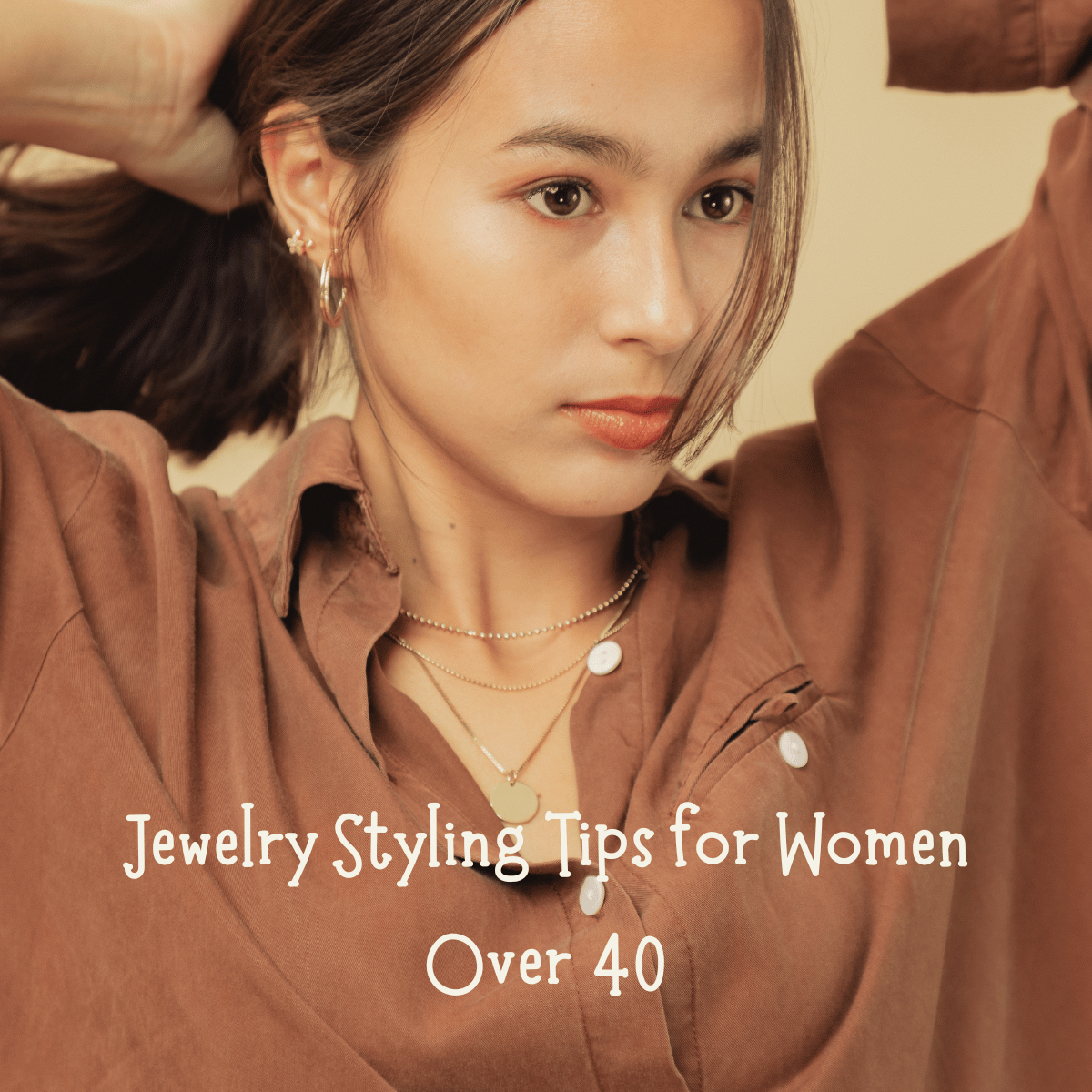
Simple Jewelry Styling Tips for Women Over 40
The Art of Balance When Wearing Multiple Pieces
Balance is the foundation of any well-put-together jewelry look. The most common styling mistake is treating each piece as an independent decision rather than as part of a whole.
When earrings, necklaces, bracelets, and rings compete for attention, the result feels cluttered rather than curated. Drunk Angel designs pieces with distinct character that are still easy to wear together without overwhelming a look. A simple rule to keep in mind: identify one focal point and let everything else support it.
This means that bold statement earrings pair best with a delicate necklace or no necklace at all. Conversely, a layered necklace arrangement works better when earrings are understated, such as small studs or thin hoops.
The same logic applies to the wrists. A cuff or chunky bracelet on one wrist can stand alone as a strong accent, while stacking three or four thin bangles on the other wrist creates a different but equally intentional effect.
Scale also matters more than most people realize. Petite frames generally look more proportionate with medium-sized pieces rather than oversized ones, while taller women or those with broader shoulders can carry larger, more architectural pieces without the jewelry appearing to swallow the look. Neither extreme is off-limits, but it is worth trying on pieces in front of a mirror with your outfit on rather than judging them in isolation.
One practical approach is to lay out all the jewelry you plan to wear before putting any of it on. Seeing the pieces together gives you a better sense of whether the combination feels harmonious or overwhelming. Removing one item from the arrangement is almost always easier than it seems, and the result is usually a cleaner, more polished look.
Choosing Earrings That Lift & Flatter
Earrings are arguably the most impactful category of jewelry for women over 40. Because they sit close to the face, the right pair can direct attention toward the eyes, soften the jaw, or add a sense of energy to a simple outfit. If you update only one aspect of your jewelry wardrobe, earrings are the place to start.
Drop earrings and hoops with a little movement tend to be particularly flattering because they draw the eye upward and outward. A medium-sized gold or silver hoop suits nearly every face shape and works across casual and dressed-up contexts. Studs remain a wardrobe staple, but choosing a stud with slight dimension, such as a small cluster or a faceted gemstone, tends to read better than a flat, very small stud that can disappear against the earlobe.
Comfort is a real consideration at this stage. Heavy earrings worn daily can stretch piercing holes over time, and sore earlobes by mid-afternoon are not worth any style point.
Lightweight metals, resin, and beaded designs offer visual impact without the weight. If you already have slightly stretched piercings, supportive earring backs designed to lift the post and reduce drooping are widely available and genuinely effective.
Necklace Lengths and Neckline Pairing
The relationship between necklace length and neckline is one of the most useful pieces of styling knowledge to internalize. When these two elements work together, an outfit feels complete without effort. When they clash or repeat the same line, the result looks unintentional.
A V-neck top or dress is naturally complemented by a pendant necklace whose chain falls in a similar diagonal direction, continuing the visual line rather than interrupting it. Crewnecks and round necklines tend to look best with longer chains or layered necklaces that create length and draw the eye downward.
High necklines and turtlenecks are the one situation where forgoing a necklace entirely often works better, shifting focus to statement earrings or a bracelet instead.
Layering necklaces has become a genuinely versatile styling tool, but it requires a few practical guidelines to avoid a tangled or chaotic look. Keep the largest pendant or thickest chain at the lowest point. Allow roughly one to two inches of visual space between each necklace so individual pieces remain visible. Combining varying textures, such as a delicate chain with a chunkier link, adds more visual interest than layering identical styles.
Rings & the Case for Intentional Stacking
Rings offer a satisfying way to build a personal look incrementally. Unlike earrings or necklaces, they are easy to add or remove throughout the day, which makes them well-suited to experimenting with style. The stacking trend, which involves wearing multiple rings across one or more fingers, can look effortless or overdone depending on how it is approached.
A balanced stack typically includes a combination of different elements: one ring with texture or detail, one smooth band, and possibly one with a small stone. Three rings across one hand or spread across two hands tend to be the sweet spot between understated and expressive. Mixing metals within a stack, gold alongside silver or rose gold, works well when done with intention rather than as an accidental result of grabbing whatever is nearby.
Sentimental pieces, including family rings, engagement rings, or pieces worn for years, anchor a stack beautifully when paired with newer additions. The mix of old and new creates a look that feels personal rather than assembled for the sake of following a trend.
Building a Versatile Everyday Jewelry Wardrobe
A practical jewelry wardrobe does not require a large collection. It requires a thoughtful one. The goal is to have pieces that can move between contexts without much deliberation: from a weekday work outfit to a weekend errand run to an evening out. Versatility usually comes down to choosing pieces in classic silhouettes with enough quality that they age well.
A few high-utility pieces worth owning include a pair of medium hoops in a metal that suits your skin tone, a pendant necklace on a chain long enough to work with several necklines, a simple cuff or thin bangle, and at least one pair of small studs for days when simplicity is the priority. These do not need to be expensive, but they should be comfortable enough to wear for several hours without irritation.
Warm skin tones (those with golden, peachy, or olive undertones) tend to be flattered by yellow gold, brass, and copper-toned metals. Cool skin tones (pink or bluish undertones) typically look better with silver, white gold, or platinum. This is not an absolute rule, but it is a useful starting point when you are unsure between two options.
Mixing Metals & Updating Classic Pieces
The idea that metals should always match has largely faded, and for good reason. Mixing gold and silver, or combining either with rose gold or oxidized metals, produces a more dynamic and contemporary look than a rigidly matched set. The key is approaching it with intention rather than indifference.
One practical method is to anchor the combination with a neutral piece, such as a mixed-metal chain or a ring that incorporates both gold and silver, which creates visual continuity between the two tones.
Another is to keep metals consistent in one zone (for example, all gold earrings and necklaces) while introducing silver on the wrists, where the contrast feels deliberate rather than accidental.
Classic pieces like pearls, chains, and simple hoops are perennial, but they can be refreshed by choosing versions with slightly unexpected details.
Baroque pearls, which are irregularly shaped rather than perfectly round, have a more organic quality that feels current. Sculptural hoops with hammered or brushed surfaces offer more visual texture than a plain circle. These updates preserve the familiarity of a classic while keeping the look from feeling dated.
Your Style Is the Point
Jewelry at 40 and beyond is most effective when it reflects who you actually are rather than who a style guide says you should be. The practical advice about balance, scale, and neckline pairing is genuinely useful, but it should serve your expression rather than replace it.
If you love bold pieces, wear them with confidence. If you prefer a single, quiet accessory, that restraint is its own kind of style. The most flattering jewelry has always been the kind worn with ease and ownership, regardless of trend cycles or age-related rules invented by others.