Choosing accessories for a wedding outfit takes more than picking out pieces you happen to love on their own. Earrings, hairpieces, necklaces, and bracelets all shape how formal, balanced, and comfortable the finished look feels across many hours of wear.
Why Wedding Accessories Require More Than Personal Taste
A pair of bridal earrings, for example, should be considered alongside the neckline, hairstyle, fabric weight, and how the wearer actually feels wearing them, not chosen in isolation.
The best accessories complement the garment rather than compete with it, which means thinking about proportion, material, and practicality from the outset. The goal is coordination, not perfect matching.
This article lays out a practical framework: assess the outfit’s shape, establish a focal point, match accessories to the setting, prioritize comfort and safe materials, build a cohesive palette, incorporate sentimental pieces thoughtfully, and plan ahead for care on the day itself.
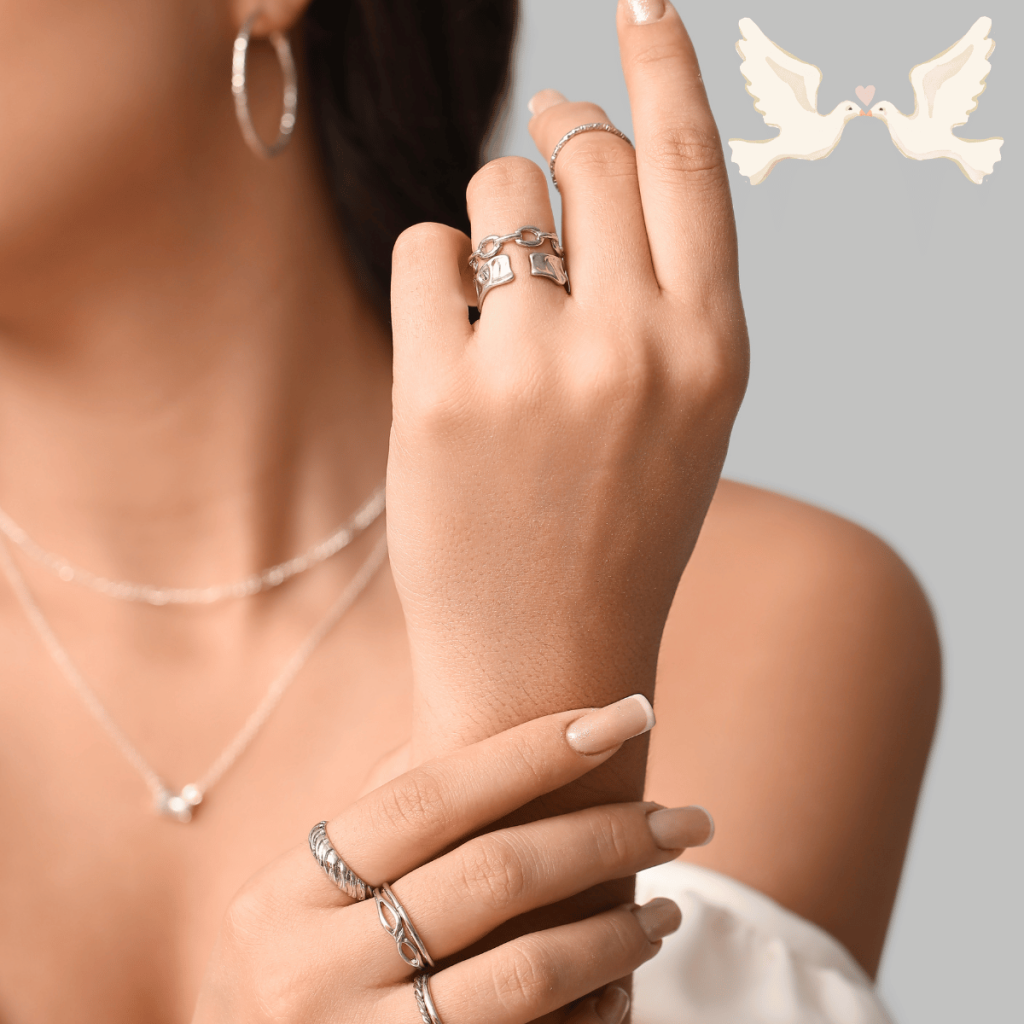
Start With the Wedding Dress Overall Shape
Before choosing any accessory, take a close look at the wedding dress, its neckline, sleeve length, fabric texture, embellishment, silhouette, and overall formality.
These elements determine how much visual weight the garment is already carrying. A heavily beaded or lace-covered dress often looks best paired with restrained accessories, while a simpler, more minimal silhouette can handle a stronger statement piece.
Trying to match every single detail, metal tone, stone color, texture, can end up making an outfit feel overly uniform rather than intentional. One practical step worth taking is photographing the complete outfit in both natural daylight and indoor lighting, since proportion and shine can read quite differently under each.
Coordinate With the Neckline
The neckline largely determines how much room there is for other accessories. A high or heavily decorated neckline may already supply plenty of visual interest on its own, while an open neckline can support a more defined focal piece, such as a necklace or a pair of distinctive earrings. These are considerations, not fixed rules, and should flex depending on body type, cultural dress traditions, and personal style.
Use a Simple Hierarchy of Accessories
A practical approach is to pick one primary focal point, a detailed neckline, a statement hairpiece, distinctive earrings, a dramatic veil, or an heirloom bracelet, and let everything else stay quieter by comparison.
Repeating a single characteristic, whether that’s a particular finish, stone color, or texture, can tie pieces together without making them identical.
Quick balance check:
– Is one element clearly dominant?
– Do the accessories compete with the dress’s own details?
– Do the finishes look intentional together?
– Is the overall effect comfortable and representative of the wearer?
Match Accessories to the Setting & Dress Code
The venue and ceremony format shape both scale and practicality. A formal indoor ceremony tends to allow for more delicate, structured pieces, while outdoor weddings, beach settings, or humid climates call for extra attention to wind, perspiration, and movement.
Garden or woodland venues often involve walking across uneven ground, and city or evening events may stretch into the late hours, which affects comfort over time.
Rain, humidity, and long receptions are worth planning for no matter the setting. None of these environments has one ‘correct‘ style, these are practical factors to weigh, not strict rules to follow.
Prioritize Comfort, Skin Sensitivity, & Secure Fit
Accessories should be tested before the wedding day rather than worn for the first time during the event itself. Check the weight of each piece, how secure the fasteners are, any potential pressure points or sharp edges, and whether anything might snag hair or fabric. Confirm that everything works with the planned hairstyle and any headpieces.
It’s also worth noting that nickel exposure is a recognized cause of contact dermatitis, and earlobes are a commonly affected area when earrings are involved.
Readers with a history of recurring irritation should review material composition carefully and consult a qualified healthcare professional for assessment or patch testing; avoiding the triggering metal remains a central management strategy.
A hypoallergenic label can be a helpful indicator, but it shouldn’t replace actually checking the material. Comfort is part of successful styling, not an afterthought. Running a short trial of the complete accessory combination well before the event leaves time for adjustments.
Build A Cohesive Metal & Color Palette
Metal finishes affect how warm or cool an outfit reads overall. Coordinating yellow, white, and rose-toned metals with pearls, crystals, colored stones, and fabric details, along with dress hardware and wedding-party accessories, can help create cohesion.
Mixing metals can work beautifully when it looks deliberate, often achieved by repeating one visual detail, such as a shape or finish, across different pieces. There’s no single metal that universally suits every skin tone or dress color, so personal preference legitimately plays a role here.
Incorporate Sentimental & Practical Pieces
Heirlooms, borrowed items, cultural pieces, and family jewelry often carry meaning that outweighs strict style considerations. Before the day, consider whether an inherited piece fits the outfit’s scale, can be worn securely, needs cleaning or repair, or has any fragile components.
Photographing heirlooms before any alterations or professional cleaning preserves a record of their original condition. A meaningful item doesn’t have to be worn exactly as designed, it can just as easily be worked into a bouquet wrap, hair arrangement, or reception outfit instead.
Plan for Maintenance & the Wedding Day
Store accessories separately in soft, labeled containers to avoid scratching or tangling. Cleaning methods vary depending on material, plating, stones, and adhesives, so avoid applying perfume, hairspray, lotion, or makeup directly to accessories.
Putting them on after hair and makeup is usually the more practical order. It helps to bring along a small pouch, spare fasteners where available, fashion tape or basic repair supplies, and to designate one trusted person to collect everything after the reception. Valuable, antique, or fragile pieces deserve guidance from a qualified jeweler or conservator rather than generic cleaning advice.
Final Takeaway: Create A Look That Works In Real Life
Start with the outfit’s shape and details, settle on one focal point, coordinate finishes without demanding exact matches, test for comfort and material compatibility, and put together a simple storage and care plan.
The most successful accessories support confidence, movement, and personal meaning throughout a long day. Building a full-look checklist and testing the complete outfit well in advance leaves room for adjustments while they’re still easy to make.
Leave a Reply