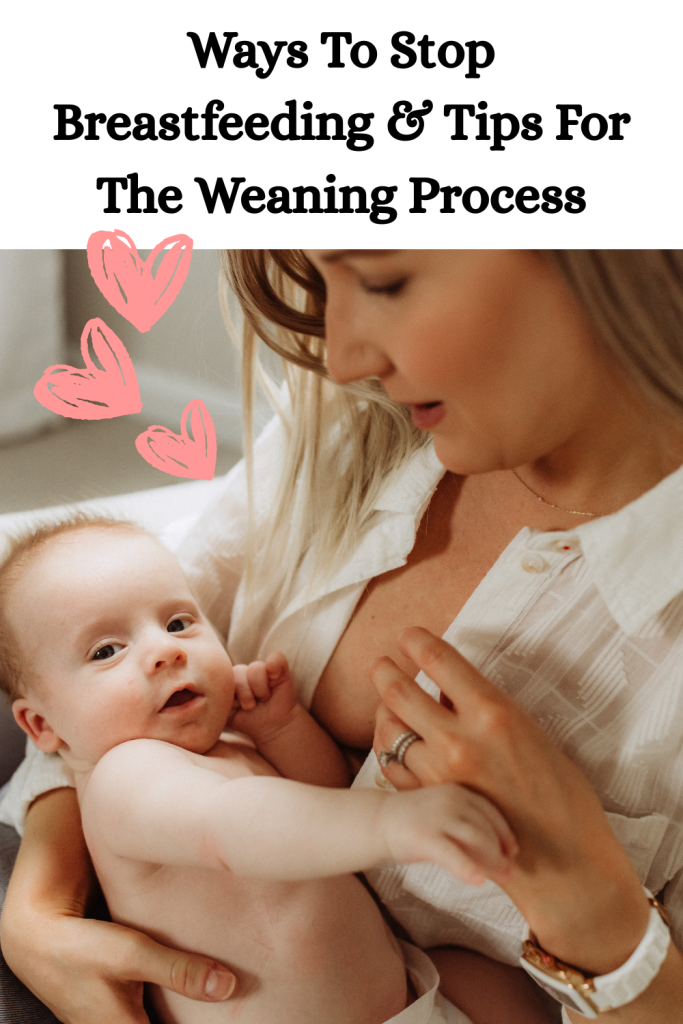
Today, we are discussing helpful ways to stop breastfeeding and tips for the weaning process. Finishing breastfeeding is a big step for the mother as well as for the child, and most of the time, it leads to a mixture of feelings.
Each transition to weaning is different; however, usually a gentle method of handling it is the most effective. Besides that, the best breast milk cooler bags can be a great aid in the storage and transport of the milk obtained during the weaning process.
This article will provide easy ways you can finish breastfeeding more effortlessly and still keep your baby and yourself happy and healthy. You will be taught to identify the appropriate time, simplify the transition step by step, and look after your own health.

Ways To Stop Breastfeeding And Tips For The Weaning Process
The main purpose of this article is to make the breastfeeding and weaning transition as simple as possible without your baby (or you!) getting upset or stressed out.
How to Know When It’s Time to Finish Breastfeeding
Deciding when to start finishing breastfeeding is a personal choice shaped by your baby’s needs and your own readiness. Gradually, some infants slowly show no interest, showing that they are satisfied with the consumption of solid foods or they are becoming interrupted at the feeding time.
The mother’s physical discomfort, emotional tiredness, or the desire to go further may be some of the reasons why the mom would feel ready to stop breastfeeding.
There isn’t a particular “right” time, it is about what is best for both you and your baby, managing the change in a smooth and easy way.
Weaning Gradually vs. Suddenly: What’s Best for You and Baby
When finishing breastfeeding, the decision is most often between gradually decreasing the milk supply or a sudden stop. Usually, it is easier to wean your baby off your breastmilk slowly as this gives your infant time to accept the change and will help give your body time to regulate your milk supply. It also reduces the risk of engorgement and helps your child slowly find comfort in other routines.
Sudden weaning may be needed for health, medication, or just personal reasons. While it can feel abrupt, the extra love with cuddles, bonding, and playing with the child may give less feeling of anxiety to both of you during the change.
For the most part, a gradual weaning is the selected option of most families who see it as a more positive final stage of the feeding process.
That said, each situation is unique, meaning that the best decision that would reflect your needs, your child’s readiness, and your living habits would be the right one.
Emotional Considerations for Both Mom and Child
Finishing breastfeeding is a change beyond the physical, it can also be an emotional path for the mom and baby. Recognizing these emotions and reacting with patience can facilitate the transition to be more rounded.
For Mom:
- May feel relief, pride, or freedom
- Can also experience sadness, guilt, or loss
- Needs time to process emotions without judgment
For Baby or Toddler:
- Some adjust easily, others may seek extra comfort
- May ask for more cuddles or closeness
- Benefit from consistent routines and bonding activities
How to Reduce Feeds Without Causing Discomfort
For both mother and baby to adjust properly, when finishing breastfeeding, feeds should be reduced gradually. A step process prevents the occurrence of engorgement, decreases the chances of clogged ducts, and makes the transition easier for your child to take.
Here are some steps you can try:
- Drop one feed at a time – Begin by eliminating one nursing session every few days or each week.
- Offer alternatives – A feed can be replaced with a snack, solid meal, or cuddle time.
- Shorten feeding sessions – Your baby should be slowly and gently weaned off the breast for the particular feed before the complete stop.
- Distract and redirect – Do not give the baby the breast; rather, keep him/her busy with a walk, play, or storytime.
- Adjust your schedule – Feeds should be spaced out gradually so as to allow your body to reduce the milk supply naturally.
- Care for yourself – Make sure to drink enough water, wear the bras that give you support, and use hot or cold packs if necessary.
Preventing Engorgement and Managing Milk Supply
Once you start finishing breastfeeding, your body will need some time to adapt to the lower demand. If you stop breastfeed supply suddenly, you might have a congested breast, blocked milk ducts, and pain.
So it is a safer option to reduce the amount of milk slowly and at the same time, make sure that you take care of your breasts. Below are some tips that could help you in avoiding engorgement and controlling milk supply:
- Wean slowly – Drop one feed at a time.
- Hand express – Release a little milk for relief.
- Compresses – Warm for flow, cold for swelling.
- Use best breast milk cooler bags – Store or carry expressed milk safely.
- Supportive bra – Avoid tight or restrictive fits.
- Stay hydrated – Rest and fluids ease the process.
- Watch signs – Seek help for pain, fever, or redness.
Helping Your Baby Transition to Other Sources of Comfort
Finishing breastfeeding does not signify the end of the relationship between you and your baby—just that new bonding ways have been formed.
Infants might require physical contact. Hence, providing them with simple and gentle methods to be with them can make them feel secure and loved in this period.
Extra Cuddles
Hugging, rocking, or cuddling your baby gives closeness just like in nursing and also gives them the feeling that you are still close by.
Bedtime Routines
The comforting ceremonies like songs, stories, or gentle back rubs can be very helpful for your baby to relax and just fall asleep without breastfeeding.
Comfort Items
Perhaps a blanket or a soft toy could be the source of security for your baby, especially when he/she is not nursing.
Distraction with Play
If you involve your baby in games, a walk or other fun activities it will help to turn his/her attention away and to establish new positive habits.
Involve Others
If you let your partner or family members comfort your baby it will help your baby to make new connections and share in the bonding.
Night Weaning Tips for a Smooth Process
Night weaning is probably the toughest part of the whole process of finishing breastfeeding, as infants most times feed at night for comforting provision just as much as for eating.
The good news is that with enough patience and firm consistency, you can not only help your baby get used to the new sleeping habits but also make him feel safe and loved. Try these ideas:
- Gradual reduction – Drop one night feed at a time.
- Offer comfort in other ways – Rock, pat, or whisper gently.
- Keep routines consistent – Use baths, lullabies, or cuddles for sleep signals.
- Involve a partner – Let them handle some night waking.
- Stay calm and patient – Reassure your baby through the change.
Celebrating the End of Your Breastfeeding Journey
Finishing breastfeeding is not just the end of feeding times – it is also saying goodbye to a big part which was characterized with love, work, and bonding.
The change can certainly be a little sad, but it is also an opportunity to reflect on your and your child’s journey and to thank God for the times you have both shared.
After you have moved on from the stage, you are free to think of different ways to maintain the relationship between the two of you, through cuddles, shared activities, bedtime rituals, and fun memories. With this ending, you are not losing anything but starting another beautiful phase with your baby.
“Breastfeeding is one of the chapters in the book of life, not the whole story–what goes on is the love that lasts forever.”
Finishing breastfeeding is the mother’s journey no one can ever take away, and there’s no single “right” way to do it. The most important thing is to find a pace that is just gentle for both you and your child, at the same time, that allows you to support your body and feelings through this change.
Using patience, love, and the helpful tools—like the best breast milk cooler bags to store the milk released—these changes can be simple and meaningful for both of you.
Remember that the baby feeding is the least important thing in your relationship. Your child’s bond with you does not stop there. Rather, it can even get stronger through love, reassurance, and attachment which are just a few of the innumerable ways.
PIN IT!