Today, we will talk about wearing your seatbelt wrong during pregnancy. If you’re pregnant in Idaho, you’re probably already doing the whole mental checklist every time you leave the house. Water bottle. Snacks. Phone. Prenatal vitamins. Try not to slip on the icy driveway. All of it.
But here’s the sneaky one that a lot of moms-to-be get wrong without realizing it. The seatbelt.
And not in a dramatic, you’re doing it in a bad way. More like… the belt slowly rides up. You’re wearing a puffy winter coat. You’re rushing to daycare pickup or Albertsons. You tuck the shoulder strap behind you because it feels better that way. Then, it slowly becomes a habit…
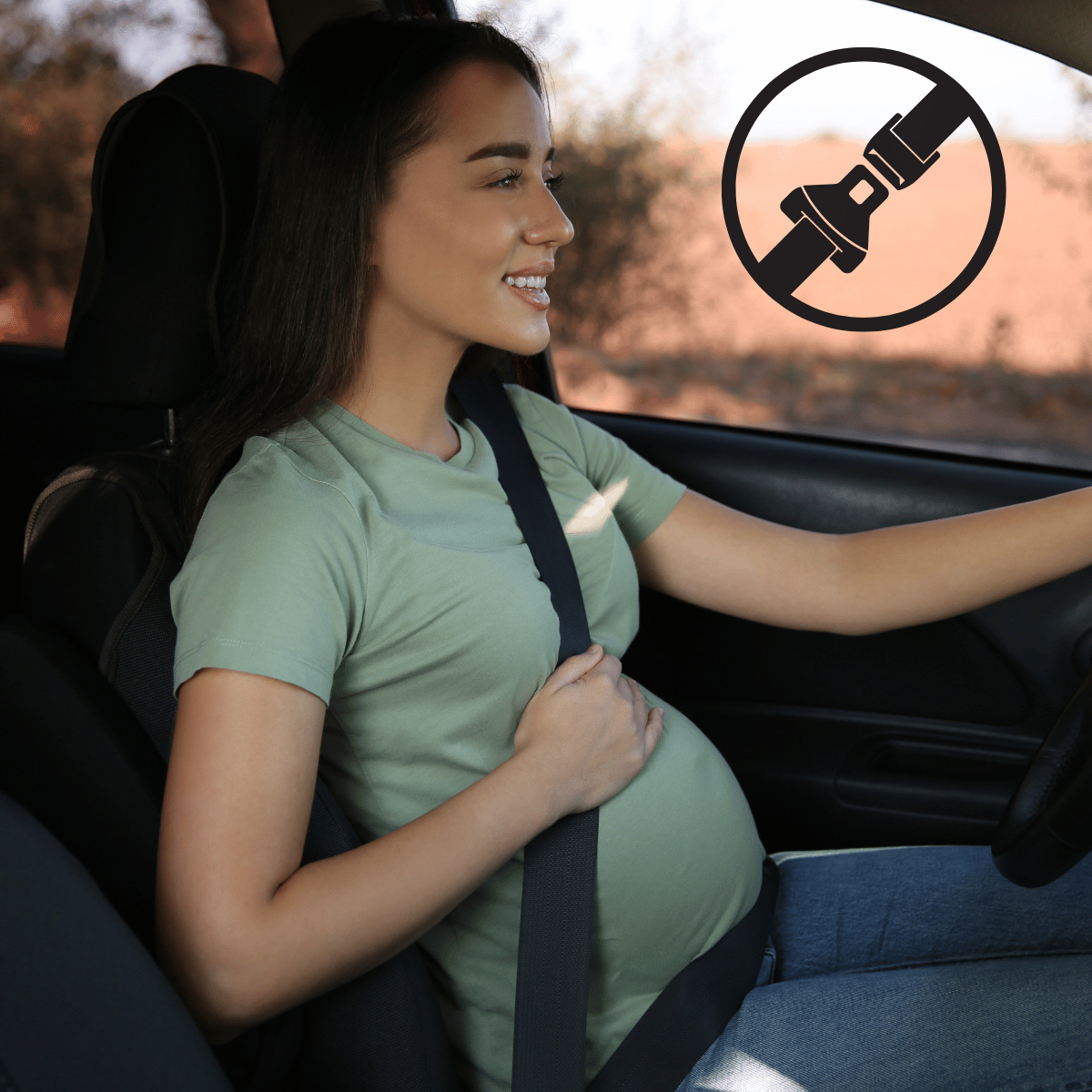
Stop Wearing Your Seatbelt Wrong During Pregnancy
So this post has two goals. You will find them below:
- Show you exactly how to wear a seatbelt when pregnant (the simple, correct setup).
- Cover the practical driving safety stuff that matters during pregnancy, especially for Idaho roads and winter conditions.
No complicated jargon. Just clear steps, do and don’t lists, and comfort tips that don’t mess with safety or your growing belly. But, if you are searching for more practical family safety content about car seat safety tips for keeping your little ones safer in the car, click that link!
Why Seatbelt Positioning Matters More Than Ever When You’re Pregnant
Pregnancy changes your body in ways that affect driving, even if you still feel pretty normal.
A few big changes are listed below:
- Your belly moves forward, which can change where the lap belt naturally sits.
- Your center of gravity shifts, so sudden braking or a slide on snow can throw your body differently.
- Your joints loosen up (thanks, relaxin), which can make your hips and pelvis feel more tender, and also affects how you sit.
Here’s the core safety principle, in plain language:
- Seatbelts reduce the risk of serious injury in a crash.
- The risk comes from wearing the belt in the wrong place, especially if the lap belt rides up onto the belly or the shoulder belt is moved out of position.
If you’re in a crash while pregnant, medical providers and insurance paperwork often note whether restraints were used correctly, and that documentation can matter later for follow-up care and any injury claim details. Basically, wearing it right helps your body now and helps the record reflect what happened.
How to Wear a Seatbelt When Pregnant
You want a standard 3-point seatbelt setup, just positioned correctly.
The quick step-by-step
- Sit back fully in the seat. Hips all the way back.
- Buckle up.
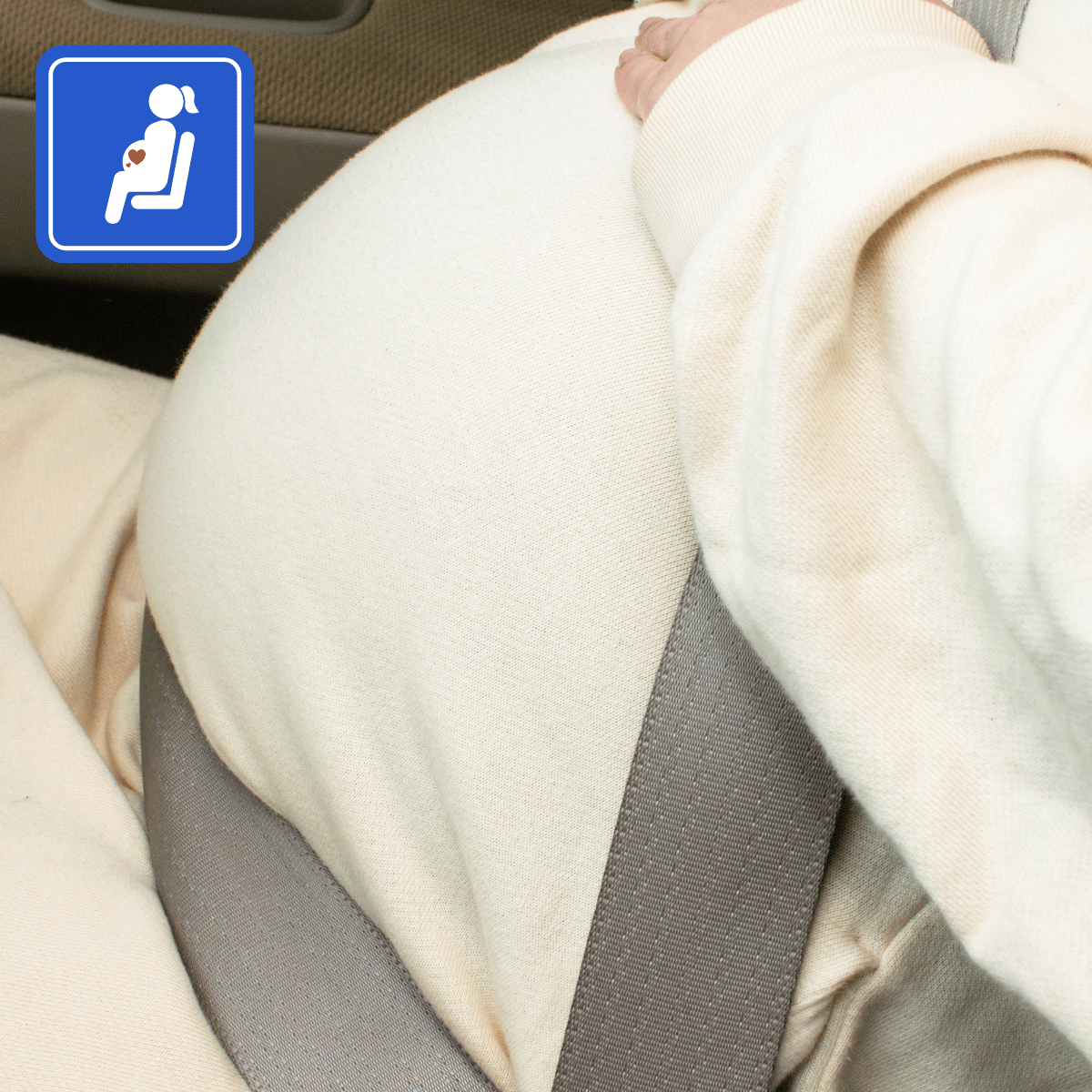
- Pull the lap belt low so it sits across your hips, not your belly.
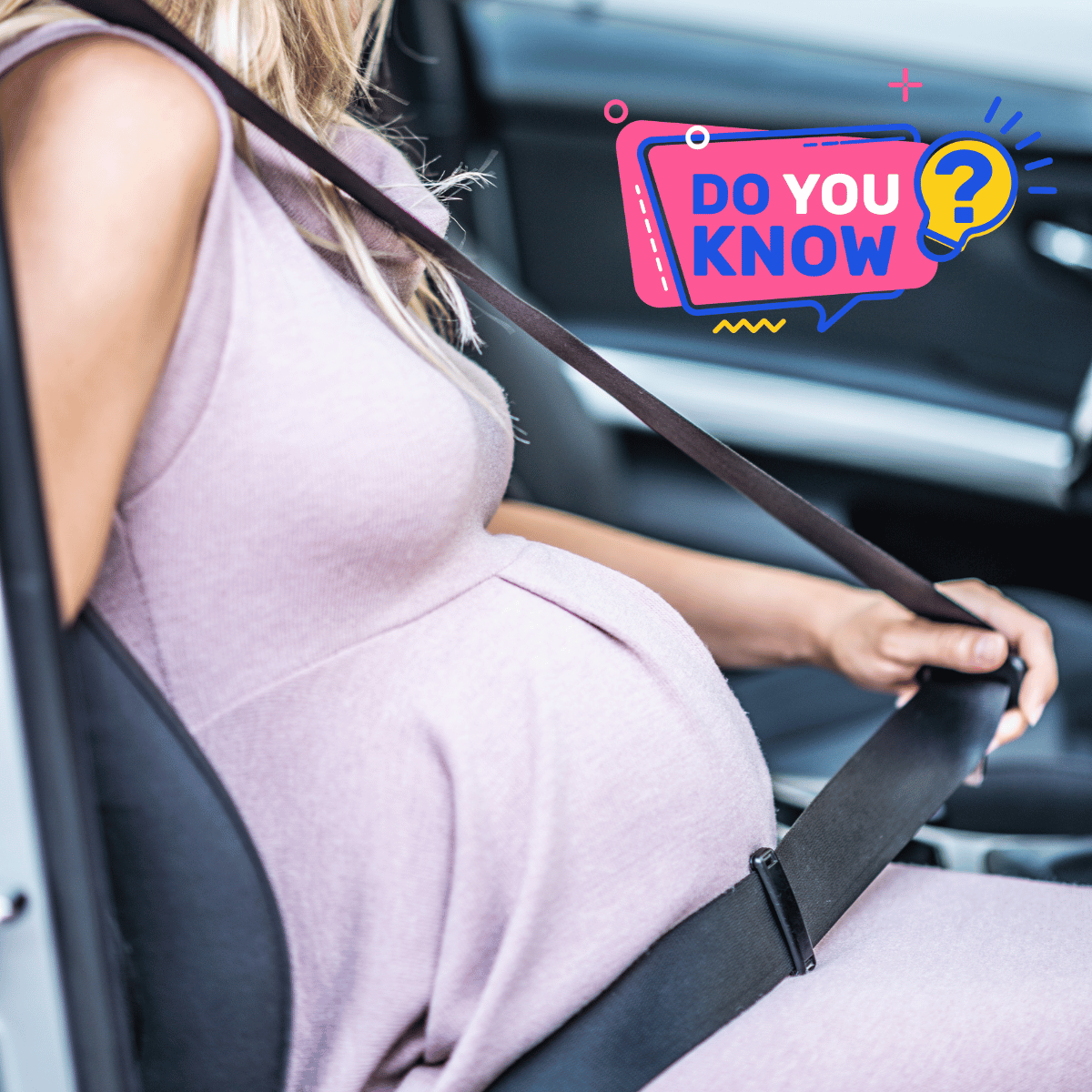
- Place the shoulder belt between your breasts, then let it run down beside your belly, not across it.
- Tighten the belt so it’s snug, not hovering.
Do Not Ever Do These Things:
- Never put the lap belt across the bump.
- Never tuck the shoulder belt behind your back or under your arm.
The 5-second mirror check (before you back out)
I like these suggestions because they help catch any “I’m rushing” mistakes:
- Glance down.
- Lap belt touching upper thighs, low on hips.
- Shoulder belt centered on the chest, then down the side of the belly.
- Quick tug to snug it up.
That’s it!
Lap Belt: Where It Should Sit (And Where It Shouldn’t)
Correct seatbelt placement when pregnant:
- As low as possible
- Across the hip bones and pelvic area
- Often, it will feel like it’s touching the tops of your thighs
Wrong seatbelt placement examples:
- Across the belly (even partly)
- High on the abdomen
- Loose over your coat or clothes, kind of floating
Small tip that helps a lot: after you buckle, pull the shoulder strap upward slightly to remove slack. Snug is safer than “comfortable loose,” especially if you’re wearing winter layers.
Shoulder Belt: The “Between the Breasts, Beside the Belly” Rule
This one sentence is the rule: Between the breasts, beside the belly.
Correct path:
- Across the center of your chest
- Over the collarbone area
- Down the side of your belly, not over it
Common seatbelt mistakes:
- Shoulder belt behind your back (super common!)
- Under your arm
- Cutting into your neck because your seat position is off
Quick comfort fix that keeps it safe:
- Adjust your seat back angle so you’re upright, not reclined.
- If your car has a shoulder belt height adjuster on the pillar, raise or lower it so it sits comfortably on your shoulder, not your neck.
What About Seatbelt Adjusters, Clips, & Pregnancy Belt Devices?
A lot of these products look helpful online. Some even feel more comfortable. The problem is that many aftermarket devices are not tested the same way your vehicle’s factory restraint system is, and changing belt geometry can alter how forces are distributed in a crash.
If you’re considering a seatbelt adjuster:
- Try vehicle adjustments first (seat distance, height, belt height guide).
- Ask your OB or midwife if they recommend a specific device for your situation.
- Follow both the device instructions and your vehicle manual.
And if you use a seatbelt adjuster at all, the baseline still applies:
- It must not route the belt over your belly
- It must not disable or interfere with airbags or pretensioners
Safe Driving Setup During Pregnancy (Before You Even Start the Car)
Seatbelt fit is huge, but your overall setup matters, too!
Quick Seatbelt Setup Checklist
- Sit upright, not reclined.
- Keep as much distance from the steering wheel as you can while still driving comfortably. A common guideline is about 10 inches from the breastbone to the steering wheel, but do what’s feasible in your car while keeping full control.
- You should be able to reach the pedals without leaning forward.
- Tilt the steering wheel toward your breastbone, not toward your belly.
And one Idaho-specific thing. Winter boots. If your boots are bulky and you can’t feel the pedals well, consider keeping a thinner driving shoe in the car and switching back to boots when you arrive.
If you feel any of the following, STOP!!!:
- dizzy
- crampy
- lightheaded
- nauseous in a way that messes with focus
Pull over. Take a break. Call someone if you need to.
Airbags: Should You Turn Them Off?
For most pregnant drivers and passengers, airbags should stay ON. Airbags are designed to work with seatbelts, not as a replacement.
A few important reminders:
- Only follow exceptions if your vehicle manual and your doctor specifically advise it.
- Never put your feet on the dashboard as a passenger.
- Keep your hands in a safe steering position and sit back.
If you’re riding as a passenger:
- Move the seat back as far as you can while staying comfortable.
- Keep the belt positioned correctly, same rules.
Comfort Hacks That Don’t Reduce Safety
Comfort matters because discomfort leads to bad belt habits.
Try these seatbelt comfort hacks:
- Small lumbar cushion or rolled towel behind your lower back
- Adjust the seat height so your belly feels farther from the wheel, but you still see the road clearly.
- Keep water and a snack nearby (low blood sugar and pregnancy do not mix well with driving).
- On longer drives across Idaho, schedule short stops before you feel miserable.
Avoid this, even if it feels cozy:
- Putting thick pillows or padding between the belt and your body in a way that changes the belt fit.
What Most Idaho Moms Need to Know
It’s understandable that pregnant women often ask, “Is it safe to drive while pregnant?”
For most healthy pregnancies, driving is generally safe if:
- You wear the seatbelt correctly.
- You’re not dealing with symptoms that affect alertness.
- You adjust for Idaho road conditions, especially snow and ice.
But safety depends on things like:
- Which trimester you’re in and how you feel day to day
- Complications (placenta issues, blood pressure, preterm labor signs)
- Medication side effects (drowsiness is a big one)
- Commute length
- Winter driving conditions in Idaho
Times to Ask Your OB/Midwife Before Driving
Get medical guidance if you’re dealing with:
- dizziness or fainting
- severe nausea that makes it hard to concentrate
- contractions or frequent tightening
- bleeding or leaking fluid
- placenta previa or any “pelvic rest” type restrictions
- high blood pressure or preeclampsia concerns
- severe pelvic pain or pain that affects braking reaction
- recent procedure or new medication
Also, if you feel “off,” don’t drive alone. That gut feeling is worth listening to!
Long Commutes & Road Trips: A Simple Safety Plan
If you have a longer drive, like Boise to Twin Falls, or you’re commuting every day, follow this simple plan.
- Stop every 60 to 90 minutes to walk for a minute, hydrate, and use the restroom.
- Wear comfortable clothing and avoid tight waistbands that push the lap belt upward.
- Keep the belt positioned correctly over your clothing at all times.
Idaho-friendly car kit (especially in winter):
- warm layer or blanket
- phone charger
- water & snacks
- a small card with your prenatal provider info & emergency contact
Common Seatbelt Mistakes Pregnant Drivers Make (Fix These Today!)
Use this like a fast seatbelt checklist!
Lap belt across the belly
Fix: pull it low so it sits on the hip bones, touching the upper thighs.
Shoulder belt behind the back
Fix: bring it back to the center of the chest, down beside the belly.
Shoulder belt under the arm
Fix: reposition it properly and adjust the belt height if it hits your neck.
Sitting too close to the steering wheel
Fix: move the seat back, then adjust the steering wheel and mirrors.
Reclining too far
Fix: sit upright so the belt lies flat and works correctly.
Wearing the belt loose over a winter coat
Fix: tighten the belt. If your coat is super bulky, unzip a bit so the belt can sit snugly.
Putting something between you & the belt
Fix: remove it and use lumbar support behind you instead.
The 10-second “I’m in a hurry” routine
- Buckle.
- Pull the lap belt low.
- Smooth shoulder strap between breasts.
- Tug to tighten.
Done!
If You’re in a Car Accident While Pregnant (What to Do Next in Idaho)
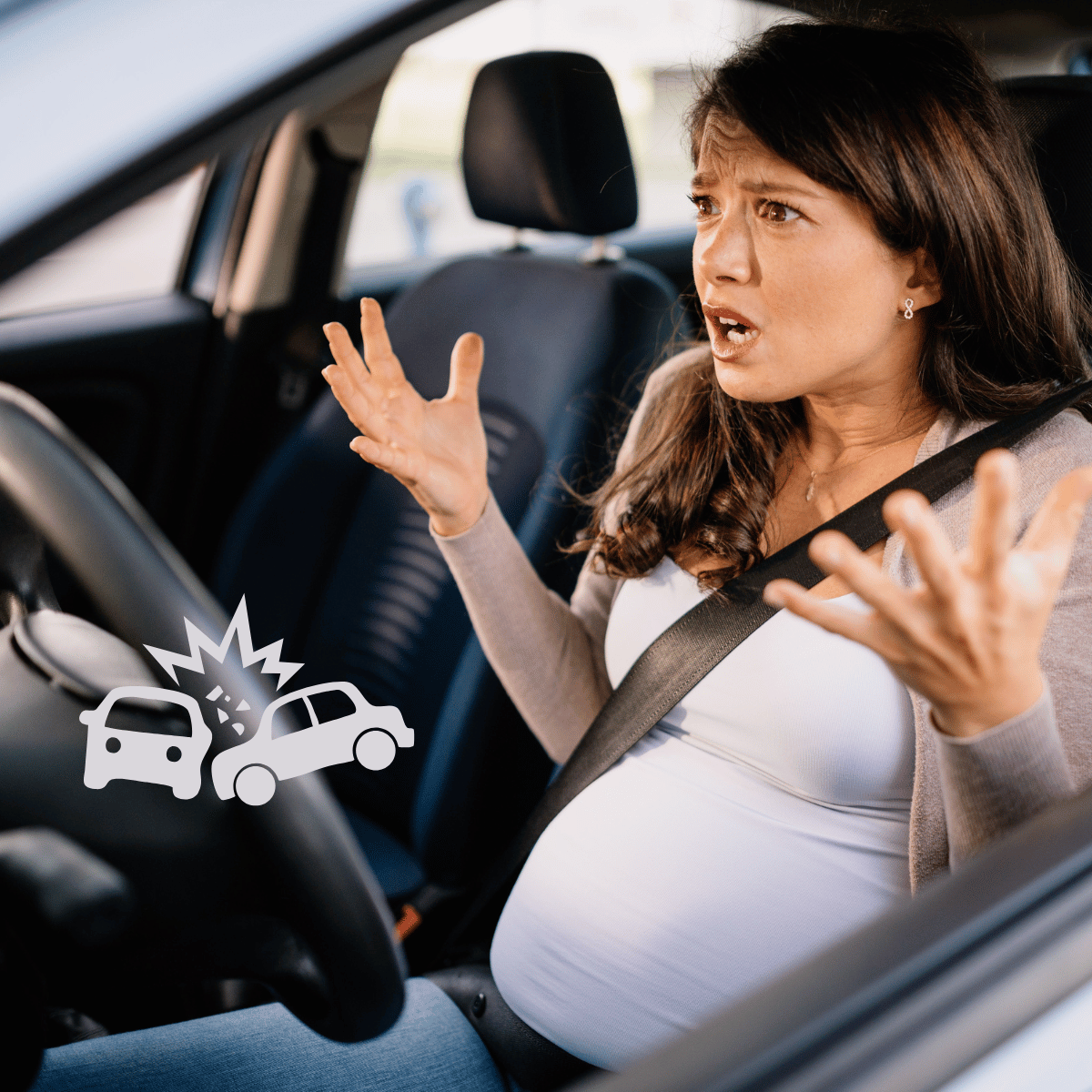
Even a minor crash can feel scary when you’re pregnant. Here’s the calm, practical version.
Right away
- Call 911 if there are injuries, heavy damage, or if you feel unwell.
- Tell responders and the other driver that you’re pregnant.
- If you can, take photos of both vehicles, license plates, the scene, and road conditions such as snow or ice.
- Photograph any visible seatbelt marks or bruising once they appear.
Medical steps (don’t skip this!)
Even if you feel fine, it’s smart to get evaluated because adrenaline can mask pain. Ask for an evaluation for you and your baby, and watch for any of the following:
- Abdominal pain
- Bleeding
- Contractions
- Fluid leakage
- Headache or dizziness that doesn’t pass
- Decreased fetal movement later on
Documentation
Keep the following on hand in case you need them later:
- Incident details and time
- Witness information
- Medical records and discharge notes
- Any follow-up appointment notes
Correct seatbelt fit reduces risk, yes. But after a significant impact, medical care still matters.
Let’s Wrap Up: The Quick Rule to Remember Every Time You Buckle Up
Every drive, remember this:
- Lap belt low on the hips, touching the upper thighs.
- Shoulder belt between breasts and beside the belly.
- Sit back from the wheel, airbags on.
Do the quick self-check before you pull out of your driveway. You’re not being extra. You’re being safe!
And honestly, share this with one other expecting mom in Idaho who’s still tucking the shoulder belt behind her back. It’s so common, and it’s such an easy fix.