As interest in peptide therapy has grown in recent years, more people have started asking which compounds are being studied for skin rejuvenation, cellular repair, and healthier aging.
Injectable peptides are often discussed in wellness centers and regenerative medicine spaces because specific peptides may support biological processes linked to collagen production, tissue repair, energy levels, and hormone balance.
*This post includes my affiliate links
If you are researching anti-aging peptides (good for you for doing the research!!!), it is a great idea to start with the science behind them to really understand what each compound is being studied for, how it may work at a cellular level, and why medical oversight is important. Amino Pharm has some really good info on them.
What Are Peptides?
Peptides are short chains of amino acids, (sometimes described as strings of amino acids), that act as the building blocks of proteins. They play an important role in many biological pathways, including skin repair, wound healing, collagen stimulation, elastin synthesis, immune function, and hormone production.
There are many types of peptides, including signal peptides, carrier peptides, and enzyme-inhibitor peptides. Some are found in topical products like peptide serums, eye cream, and topical creams, while others are studied and used in peptide injections and other peptide therapies.
The best peptides for one goal are not always the best for another, so a treatment plan should always depend on the intended use, medical history, and guidance from a healthcare provider.
How Injectable Peptides Are Linked to Anti-Aging Research
Anti-aging research usually focuses on a few major goals: supporting collagen production, improving skin elasticity, encouraging cellular repair, reducing oxidative stress, and helping the body maintain healthy biological processes over time.
Some compounds are being explored for skin health and smoother skin, while others are studied for metabolism, muscle mass, muscle tone, fat metabolism, sleep quality, blood sugar, and energy regulation.
This is one reason peptide use has become such a big topic in anti-aging journeys. Researchers are looking at whether certain compounds may influence growth factors, skin regeneration, tissue repair, and even age-related muscle loss. Still, best results depend on the compound, the protocol, and whether there is proper medical supervision.
Best Injectable Peptides for Anti Aging: What People Are Talking About
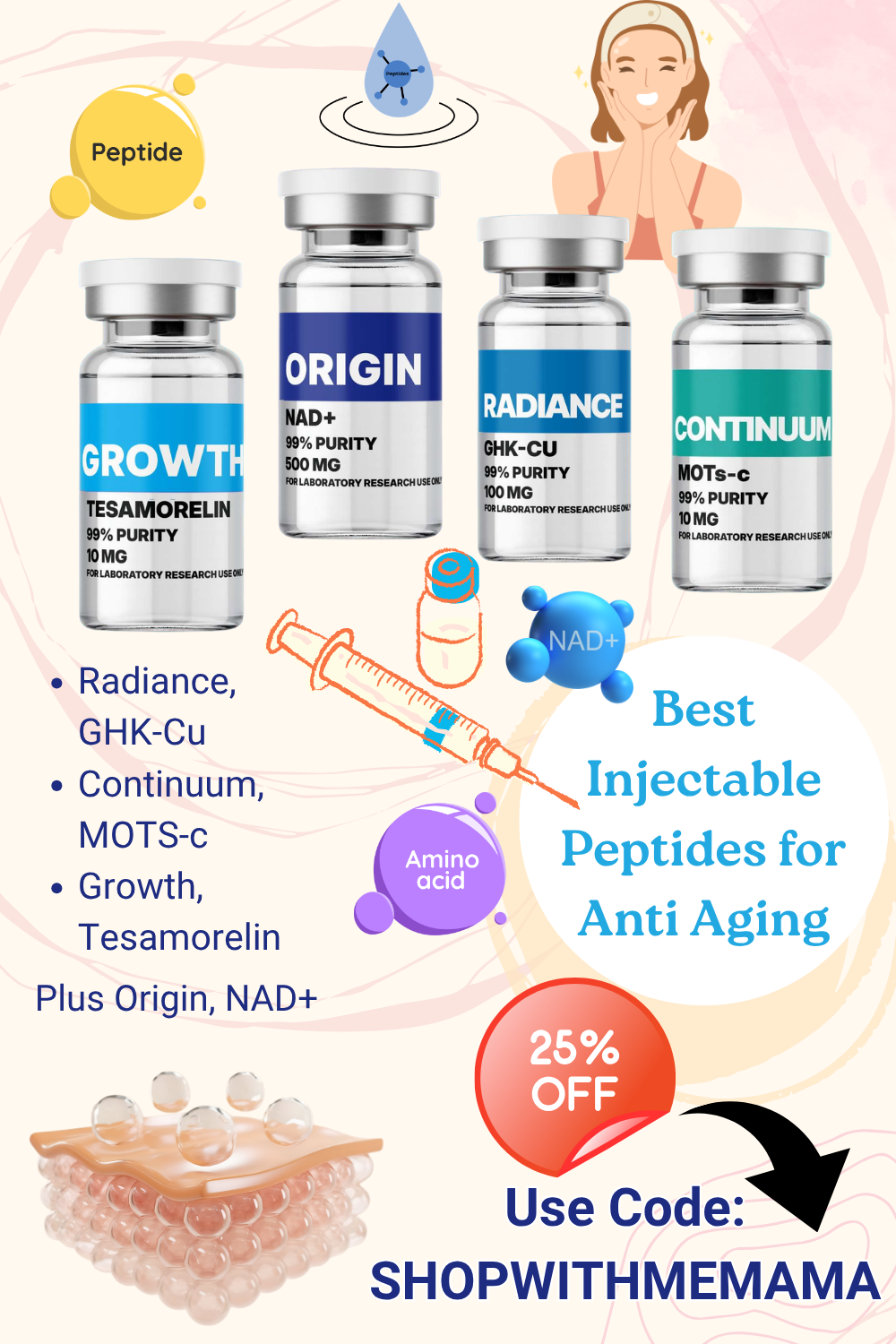
When people search for the best injectable peptides for anti aging, a few names come up again and again. At Amino Pharm, the compounds highlighted in their Cellular Research Materials collection include Radiance, which contains GHK-Cu, Continuum, which contains MOTS-c, and Growth, which contains Tesamorelin. Their Origin product contains NAD+, which is often discussed in longevity circles, though NAD+ is not a peptide.
Radiance, GHK-Cu
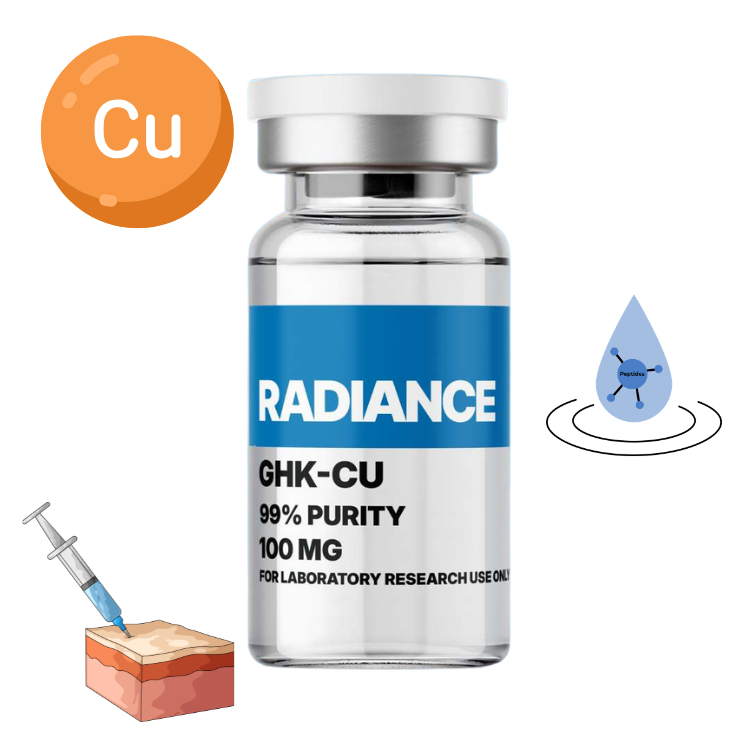
GHK-Cu is one of the most talked-about copper peptides in skin-focused research. It is a naturally occurring copper-binding peptide that has been studied for skin repair, wound healing, collagen stimulation, and extracellular matrix remodeling.
Because of its role in collagen production and tissue repair, GHK-Cu is often mentioned in conversations about fine lines, skin elasticity, age spots, and overall skin rejuvenation.
In aesthetic treatments, copper peptides are often linked to skin health because they may support collagen production, elastin synthesis, and skin barrier function while helping the skin respond to environmental damage. That is why GHK-Cu also shows up in topical peptides, peptide products, and skincare products designed for youthful skin and smoother skin.
From a research angle, GHK-Cu stands out because it is being studied for specific actions tied to skin regeneration and cellular repair. If the anti-aging goal is focused on collagen production and skin repair, this is one of the most discussed anti-aging peptides in the category.
Continuum, MOTS-c
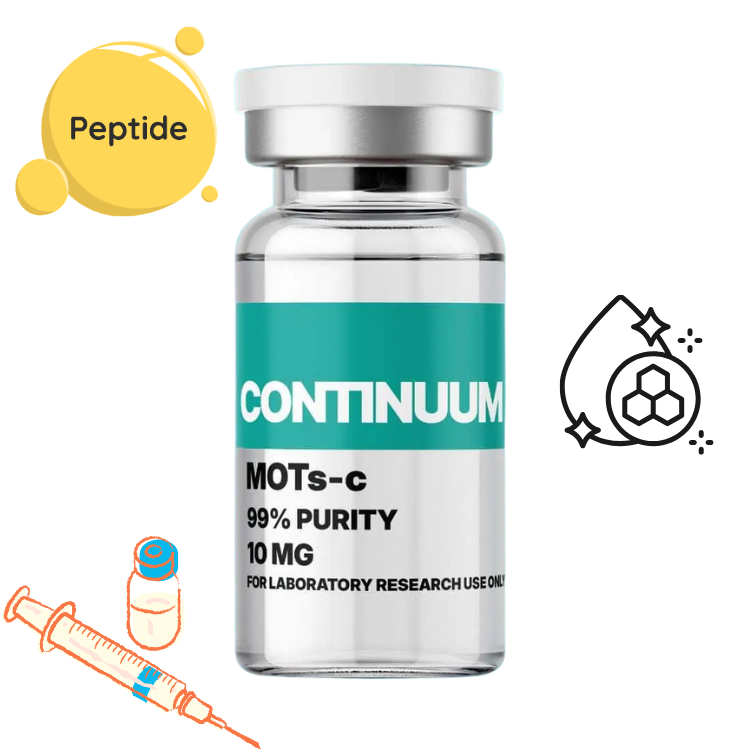
MOTS-c is a mitochondrial-derived peptide being studied for metabolism, stress response, and energy regulation. While it is not usually the first name people think of for fine lines or topical products, it has gained attention because healthy aging is not only about the look of the skin. It is also about what is happening at the cellular level.
Research on MOTS-c has explored its possible role in metabolic balance, oxidative stress, energy levels, and cellular repair. Since chronic stress, poor sleep quality, and declining mitochondrial function can affect the aging process, MOTS-c has become part of broader conversations around peptide therapies and whole-body support.
This compound is often discussed in relation to biological pathways tied to exercise response, fat metabolism, and blood sugar regulation. That does not make it a cosmetic peptide, but it does help explain why it appears in anti-aging discussions. Aging is bigger than skin deep, and MOTS-c is often included because it may support systems tied to vitality and long-term function.
Growth, Tesamorelin
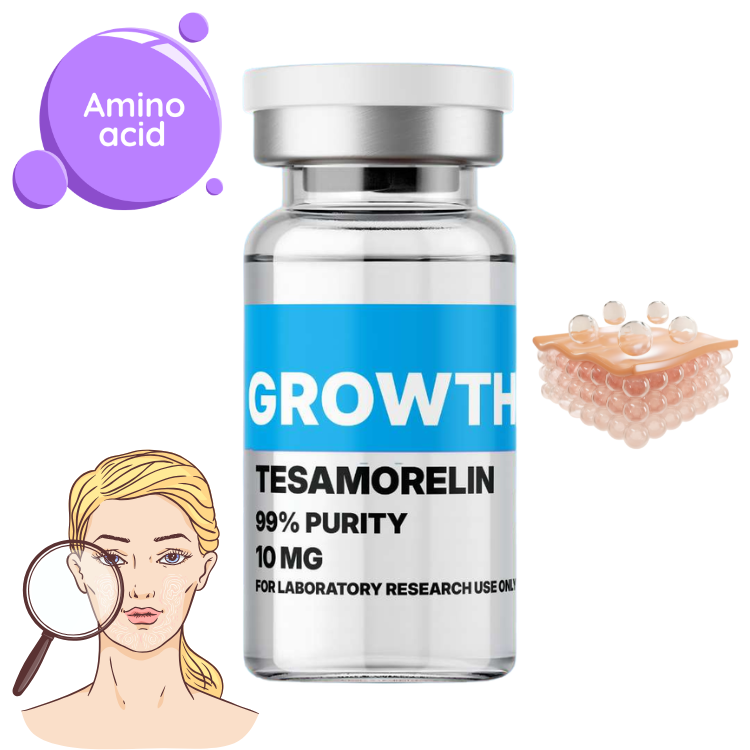
Tesamorelin is a synthetic peptide analog connected to growth hormone pathways. It is studied for its role in hormone production, body composition, fat loss, muscle mass, and muscle tissue preservation.
In anti-aging conversations, Tesamorelin is usually brought up because age-related changes can include muscle loss, lower energy levels, slower cellular repair, and shifts in fat metabolism.
Some people also connect growth hormone research with muscle growth, muscle tone, recovery, and hormone balance. That said, this is the kind of area where medical professionals and medical supervision matter a lot. Compounds that influence hormone levels are not casual skin care products, and they should not be treated like a quick fix.
Tesamorelin’s research interest is broader than appearance alone. It is often studied for how it may affect body composition and biological processes linked to aging. For people researching the best injectable peptides with a body-composition angle, this is one of the specific peptides that gets frequent attention.
Origin, NAD+
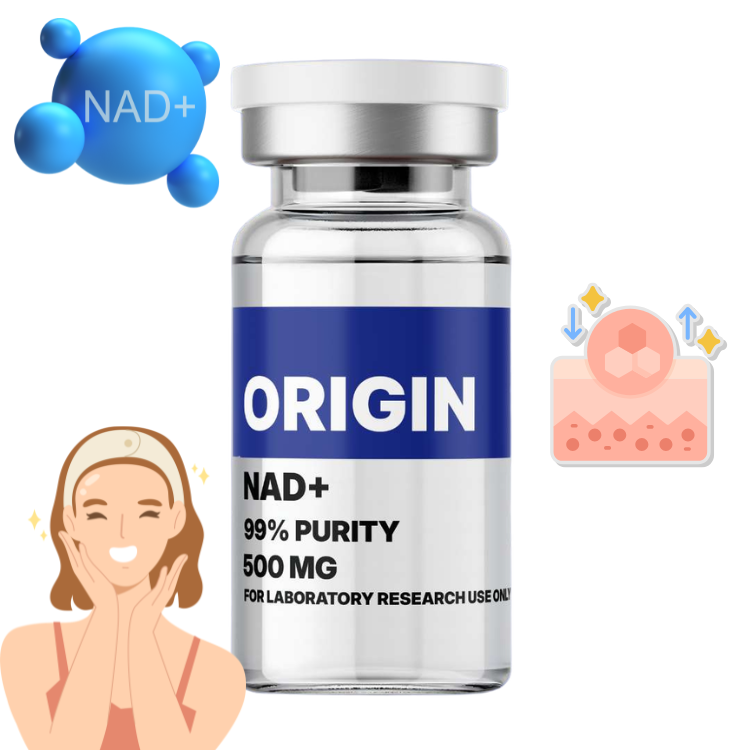
NAD+ is often mentioned in anti-aging content because it is tied to cellular energy and repair, but it is not a peptide. It is a coenzyme involved in natural process functions that help cells produce energy and manage stress.
People interested in anti-aging often look at NAD+ because cellular energy declines with age. It is commonly discussed alongside peptide protocols even though it belongs in a different category. When included in a broader article like this one, it makes sense to separate it clearly from true peptide injections.
If your focus is anti-aging research, NAD+ may still come up because it is connected to cellular repair, mitochondrial health, and age-related decline. It just should not be grouped under anti-aging peptides as if it were the same thing.
What About Other Anti-Aging Peptides?
There are other specific peptides that often come up in the anti-aging space, including thymosin beta-4 and various signal peptides used in skin care products. On the topical side, ingredients such as palmitoyl pentapeptide-4 are common in peptide serums, topical creams, and eye cream formulas made to target early signs of aging.
Topical peptides and peptide serums may help support collagen production, the skin barrier, and smoother skin with consistent use. They are different from injectable approaches, but they still play an important role in skin rejuvenation.
In many cases, topical peptides are the more realistic fit for everyday skincare products, especially when paired with vitamin C, hyaluronic acid, and other supportive ingredients.
More Injectable Peptides For Overall Health & Wellness

- Restore BPC-157
- Recovery Ipamorelin
- Drive GLP-3 (R)
- Flow GLP-1 (S)
- Clarity Semax
- Resilience TB-500
- Growth Tesamorelin
- Balance 10 mg GLP-2 (T) 10 mg
- Defense Glutathione
- Balance 30 mg GLP-2 (T) 30 mg
Are Injectable Peptides Approved for Anti-Aging?
This is where things need to stay clear. Not all peptide-based treatments have FDA approval for anti-aging use. Some are prescribed for specific medical reasons, some are being studied in research settings, and some are marketed heavily online without strong human data.
Good news does not mean blind trust. Even when certain compounds have strong safety profiles in research settings, that does not mean they are right for everyone. Allergic reactions, hormone-related side effects, and other issues can happen, especially when products are used without medical oversight.
Anyone considering peptide therapies should speak with a qualified healthcare provider who can review medical history, current medications, treatment goals, and ongoing support needs.
That matters even more if someone is also considering aesthetic treatments like laser treatments or combining peptides with other skin care products.
Why Amino Pharm Stands Out
Amino Pharm positions its products around research quality, not hype. According to the company, its Cellular Research Materials are made in the U.S., batch-tested, and verified with a Certificate of Analysis.
The brand also states that its compounds are intended strictly for laboratory research use, with testing such as HPLC and mass spectrometry used to confirm purity and structure.
That focus on traceability and reproducibility is a powerful tool in research settings. It gives labs and scientific teams more confidence when studying cellular repair, metabolism, tissue regeneration, and signaling pathways. For scientists looking into GHK-Cu, MOTS-c, or Tesamorelin, quality control is not a side note. It is the foundation.
FAQs
Q: What are the best injectable peptides for anti aging?
A: The most commonly discussed options in anti-aging research include GHK-Cu for skin repair and collagen production, MOTS-c for metabolism and energy regulation, and Tesamorelin for growth hormone pathways and body composition.
Q: Are peptide injections the same as topical peptides?
A: No. Peptide injections and topical peptides work very differently. Topical peptides are found in skincare products like peptide serums and topical creams, while injectable compounds are part of a different category and may require medical supervision.
Q: Do peptides help with fine lines and skin elasticity?
A: Some peptides, especially copper peptides like GHK-Cu, are studied for collagen production, skin elasticity, and skin repair, which may help improve the appearance of fine lines and support youthful skin.
Q: Is NAD+ a peptide?
A: No. NAD+ is not a peptide. It is a coenzyme involved in cellular energy and repair, though it is often mentioned in anti-aging conversations alongside peptides.
Q: Are Amino Pharm peptides meant for personal use?
A: According to Amino Pharm, their products are intended only for laboratory research use and are not meant for human consumption, injection, or therapeutic use.
The best injectable peptides for anti aging depend on what part of aging you are talking about. If the focus is skin rejuvenation, collagen stimulation, and skin repair, GHK-Cu is one of the most talked-about options in research.
If the focus is energy regulation and metabolic resilience, MOTS-c is often part of the discussion. If the focus is body composition, muscle mass, and growth hormone pathways, Tesamorelin usually gets attention.
But just remember; not every compound discussed online is approved for human anti-aging use, and not every trending product belongs in a personal wellness routine. Just make sure to do your own research (like you are right now! 🙂 )
For anyone exploring anti-aging peptides, the smartest path is to separate research from marketing, ask better questions, and work with medical professionals when health decisions are involved. That is how you get useful information without getting lost in the noise and become more confused than when you started your peptides research.
Where To Buy The Best Injectable Peptides for Anti Aging?
These research peptides can be purchased online through Amino Pharm website.
Get An Extra 15% Off Injectable Peptides!
You can get 15% off all peptides on the Amino Pharm website. Use the promo code: SHOPWITHMEMAMA at checkout!
*Amino Pharm states that its products are intended only for laboratory research use. They are not approved for human consumption, injection, or therapeutic use. This must be stated on all websites that sell peptides of any kind, and not just on the Amino Pharm website.*
PIN IT